

🎧 Listen to the episode:
We live in a perpetual torrent of information. From the news headlines that wake us up in the morning, to the doomscrolling we do at night, our brains are working overtime to process all this stimulation. It’s left many of us overwhelmed and unable to focus, while simultaneously bored: we reach for ever more information to chew on, and the social media platforms are only too happy to keep serving it up.
Charlotte Rubesa, a communications strategy director at London-based creative agency Wieden+Kennedy, founded a print-first zine Quiet Media as a counter to our never-ending feeds. The zine explores strategies for reclaiming our attention — and its clean, unassuming design supports that aim by making reading a calming experience. It invites readers to pause and reflect, rather than reach for the next thing.
I sat down with Charlotte to discuss the ethos behind Quiet Media, the challenges of designing for less, not more, and why product builders should think more about the consequences of their design choices.
The interview has been edited for length and clarity, but you can listen to our full discussion in the audio included in this article. This is a long, but very juicy, interview, so grab a coffee, pull up a chair and please give it your undivided attention.
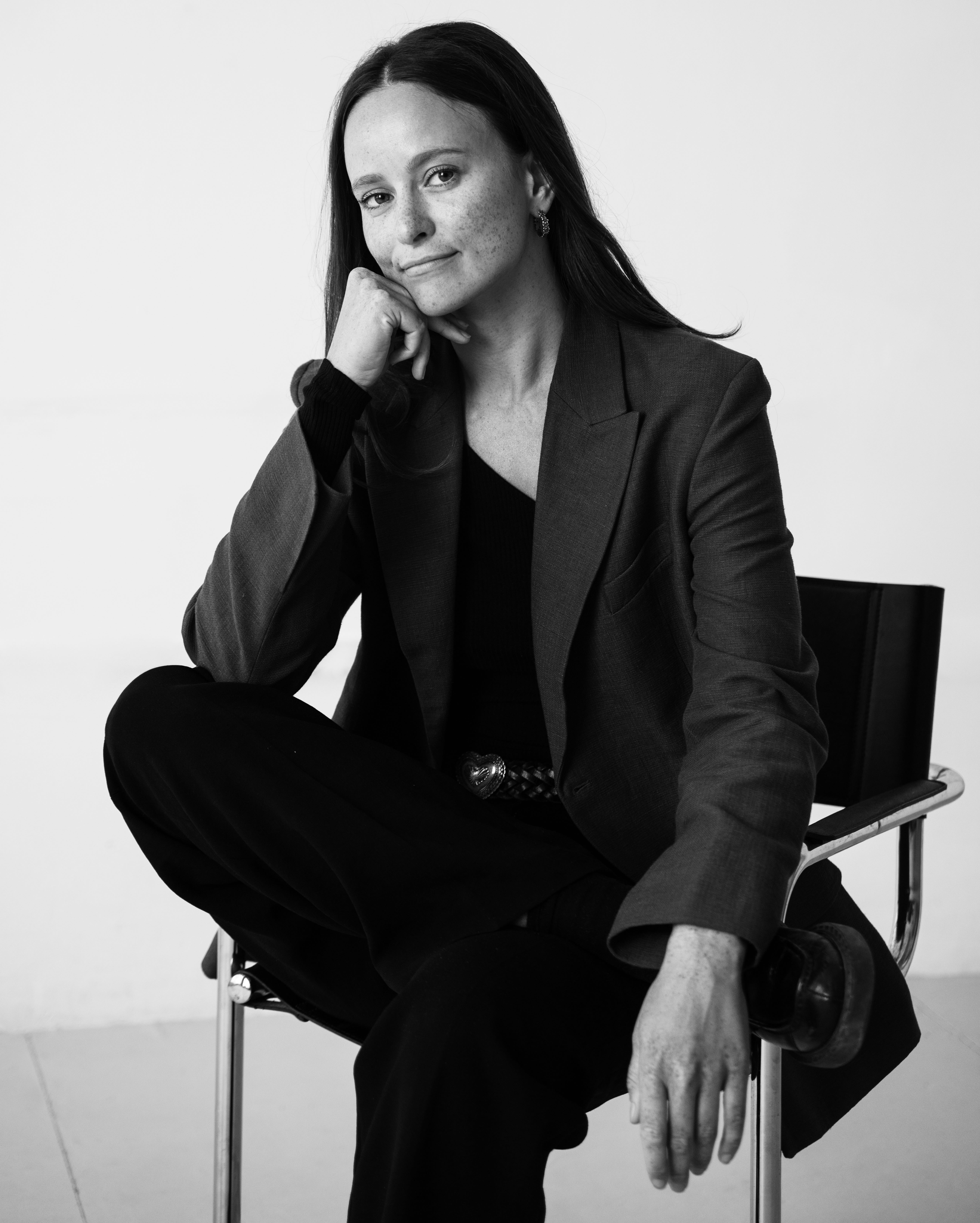
Maybe you can kick us off by explaining where the idea for Quiet Media came from. Did your background in advertising and communication strategy influence its direction?
I’ve worked my entire career in communications strategy and advertising, whether that’s in agencies or on the brand side. If I had to sum up my job in one question, it’s really: how do you get people’s attention? That’s through creative ideas — making sure you’re creating the right thing for the right audiences — but also: what are we making, where are people paying attention, what’s the latest channel our audience is on, what can you do on that channel that feels new and innovative? A lot of it has been about innovation in these spaces of attention. That’s the job in a nutshell for the last ten-plus years.
I also worked brand-side for four years at Lego, which was a very formative time for this project. At Lego, working on kids’ comms, you need a lot more intentionality — there are certain things you can say and certain places you can go, and for good reason it’s very protected: so it’s what you say, but also where you say it, and how you show up for kids.
When I returned to agency side last year, I began wondering whether that same thoughtful, conscious approach to comms and product design could be applied to adult communications. I started collecting examples of people writing on the topic and products that were in respect of attention — and ultimately that collection of stories became Quiet Media very organically.
I’m interested in the medium you chose. Can you talk about why the physical form of a magazine — or a zine to be more specific — matters here?
Initially I wanted it to be a Substack. So I had started on Substack last year and ended up in an algorithm that was completely up my alley in terms of finding people who were writing on this topic much more eloquently than I could have ever done. So once I saw and started to read all of that, I was like: “maybe what I can do on my Substack is collect all of these different people and put them together under Quiet Media.”
But when I came up with that name, Quiet Media, I then thought: what would be the most quiet way to bring that to life? And even though I did want to build the Substack, I thought this needs to be a print project. All these people are already on Substack. Online is very accessible — it’s just like the day-to-day, the default. But I felt like print was the best way to bring this thing to life in a way that felt really consistent with what I was trying to do and trying to say.

I suppose there is an element of intentionality that you have when you read something in physical form, right? Like the book itself is not connected to the internet. There’s no pop-ups, there’s no notifications. You’re just sat there and it’s just you and the words.
Exactly. Completely distraction free. It requires a bit more from you because you have to go out and buy the thing. You have to sit down, ignore all the other things in your life that could be vying for your attention at that point and just focus. And as we know, people have a bit of a hard time doing that.
I think that was all part of the experience I wanted it to be. It‘s not for everybody; it’s a project that’s for the people who are intentionally looking to protect their attention, to get inspired, to balance their consumption in different formats, not just digital and scrolling.
What do you imagine will be the regularity with which you will publish?
Right now we’re thinking annually. And that is, of course, intentional, because there are so many ideas — there definitely could be more.
But what I do want is that each issue can have a life. If you would launch one every two months or every six months, I think you’re very quickly through the life cycle of an issue. So again, according to the ethos, it’s like how do you allow things to live in the world, to have their space and time for people to react to them?
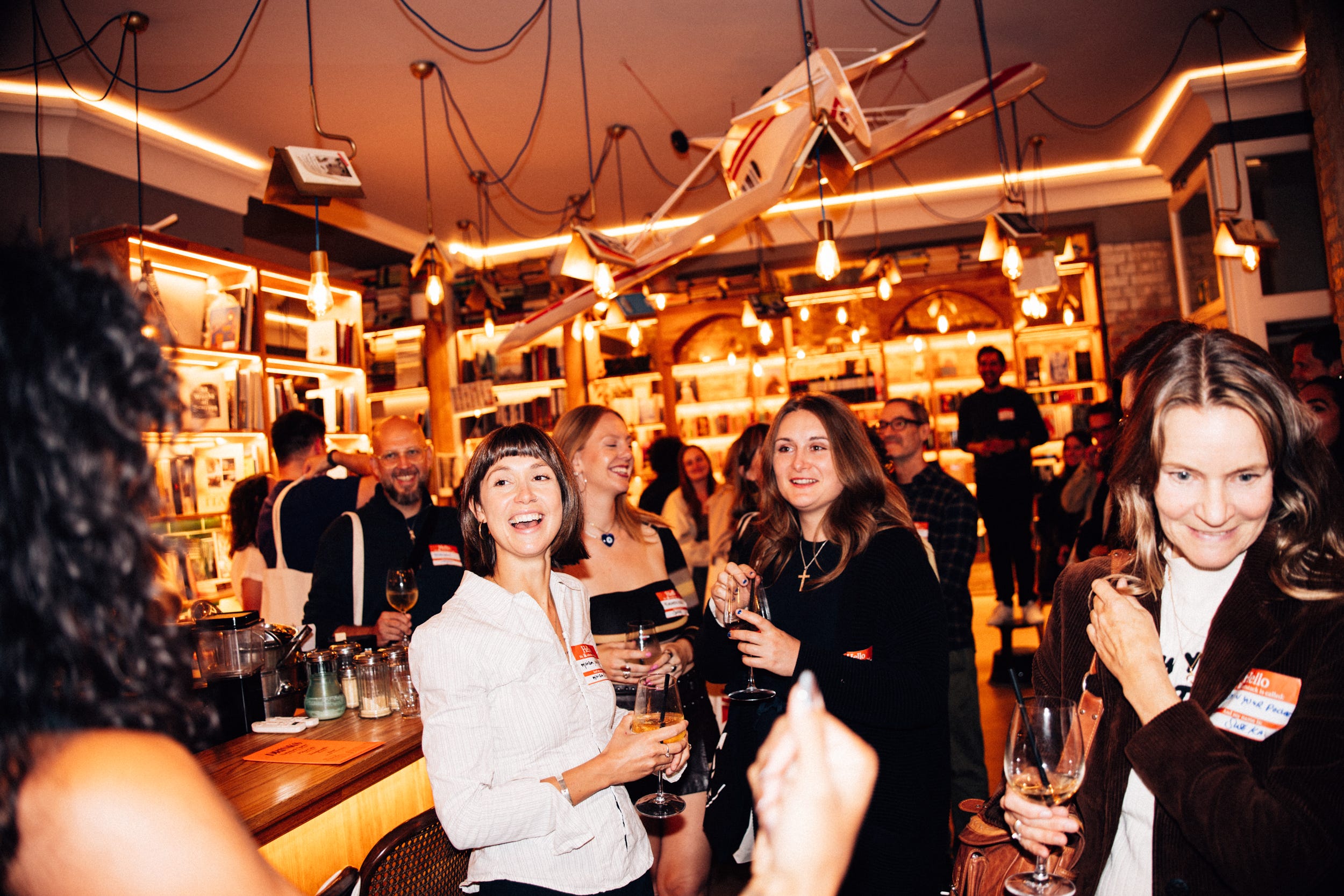
We’re doing a series of events that we’re calling the Quiet Media Zine Club, which centre around one of the contributors, pulling their thinking off the page. So that’s really exciting. We’ve done a few dinners already. My intention is for this to be an opportunity for like-minded people to meet.
I was really interested in something you wrote in one of your Substack posts, that “designing for less may be harder than designing for more.” What did you mean by this?
So obviously everyone’s been talking about the smart glasses and surveillance. Last year this was a conversation that was a little bit more under the surface, where Jony Ive — who was the chief design officer at Apple — had started working with OpenAI, and they were talking about the next device.1 And the way that they were talking about it was like: it will be screenless, it will be something more ambient, in terms of the technology and the way that it’s used.
So far, the whole tech philosophy has been “move fast, break things.” It’s been very forceful and very fast, and that’s how a lot of these companies have grown. But I think designing intentionally means thinking about long-term consequences, not just new features. It’s not just about you as a company and the feature at hand, it’s thinking long-term. And much of tech has been built by prioritising growth and engagement and feature expansion, and the consequences of that have always become apparent later.
I’m really interested in what Zoe Scaman calls a “consequence architecture.”2 So thinking about: how do you think through all the possible scenarios of a certain technology, a certain feature, before you deploy it? That due diligence hasn’t really been done to the full extent. And actually, when you’re constantly adding features, that’s quite easy, right — you can be like, “people might need this,” like an endless scroll, and the story features and all this stuff. But you’re not thinking: what impact does that have? Sometimes, trying to cut back and design for less is harder, because it’s so embedded in our culture to want to do more, and add, and grow, and we associate success with all those things.3
Is there anything that you personally kept in mind when designing the layout of Quiet Media, and how it looks on the page, to support attention rather than take away from it?
Yes. I’m not a designer, but I wanted the experience to feel like there was space, and you weren’t overwhelmed with text and images. So that was the thing that we talked about very, very early on — designing for legibility, essentially. A lot of the reports and books and design right now have a lot of embellishments — a lot of different fonts and formats and colours. So I thought, let’s do the opposite of that, to make sure that the experience is calming.
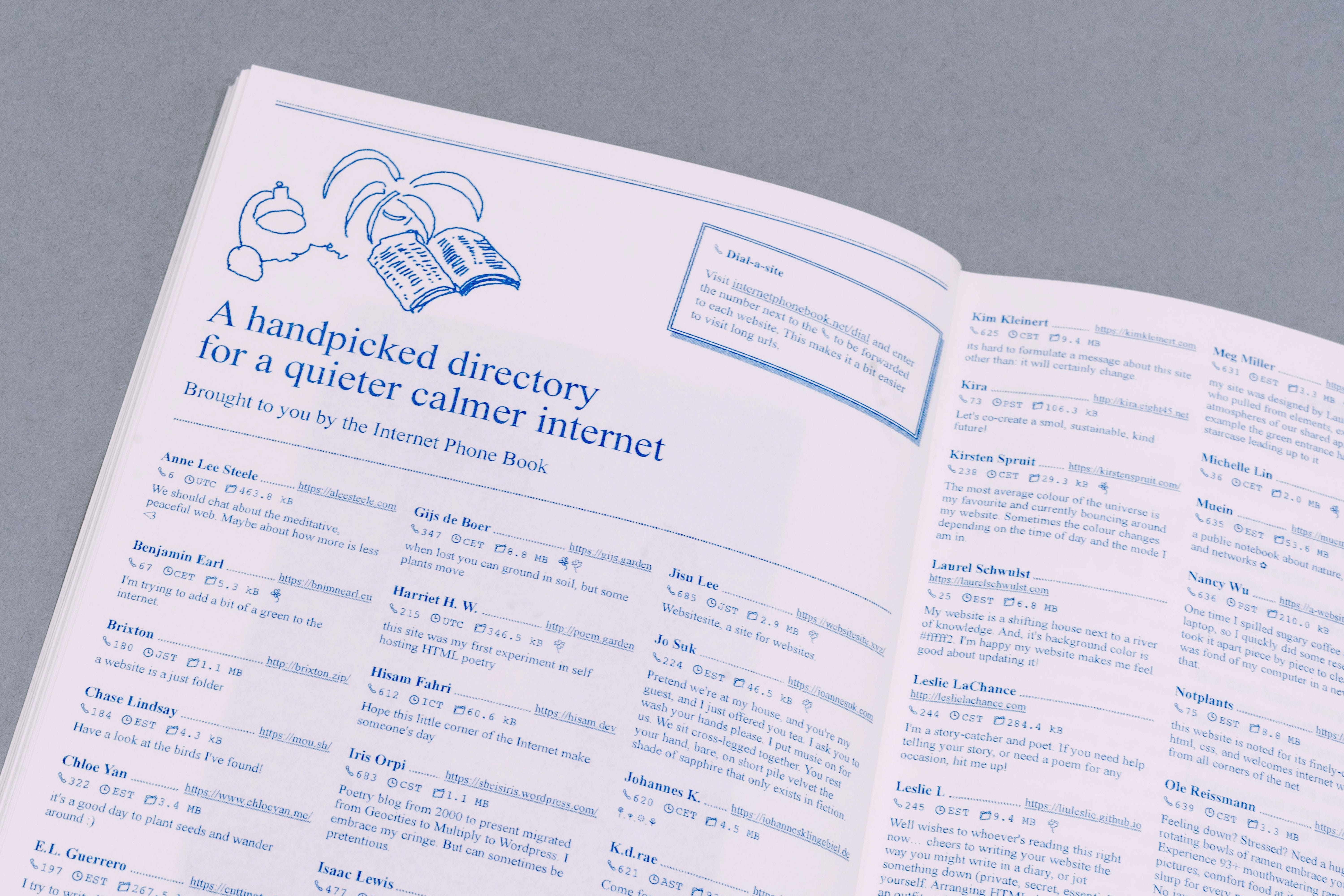
With your kind of editor-in-chief hat on, how do you choose the stories? What are you looking for? What kind of ideas do you want to convey?
I love the curation part. I love playing editor, because I’m reading a lot: I’m consuming a lot of stuff all the time for my job, but then also just for my interests. So the contributors that I have worked with, and I’m slowly looking for now for edition two, are people whose work I genuinely read, I find interesting. I’m interested in people with a point of view, who are already working into that future.
I want the reader to go through Quiet Media and be like, wow, this is actually something — it’s not a niche corner of the internet of people who are thinking thoughtfully. It’s actually across all spaces: from tech and product design, up to founders thinking in this way, to people giving frameworks and consulting businesses in this kind of approach.
I want a mix of artists, strategists, founders, creatives, just to show the breadth of the idea, and to show that there’s really this growing movement of people facing a future that is more intentional, and that it’s a very viable option. We don’t need to resort to the quick wins and the growth-at-all-costs mentality.
Are there any particular pieces, if you could choose maybe one to discuss from your first edition, that really kind of resonated with you on a personal level?
Gosh, there are so many of them. It’s like picking your favourite child.
I think what I can say is I love the mix. I love that there are some that are very practical — like the pieces by Caitlin Mayance or Matilda Lucy. They’re almost giving you a framework of three things to do, or how to look at things differently with clear takeaways for the reader. But then others are much more philosophical and explorative and imaginative, which, from a tonal perspective, I want to keep in there.
Something I was especially sensitive to last year was people telling you what to do and how to think. I feel like every time I opened my feed, I was told what the cool girls are wearing, and where to eat, and where to go — it was just very much rules-based. So I wanted to make sure that the articles were told in a way that — yes, it’s practical, but there’s also things that make you think and allow you to explore and come to your own conclusions. So that mix remains really important for issue two now.
It can be a delicate topic, right? You don’t want to prescribe someone ways in which they should or should not use technology.
That too. It’s never been about rejecting technology. I think we live in a world of technology; it is part of our infrastructure. I don’t think completely rejecting tech is the easiest or most realistic thing to do, and we probably also don’t want to do it.
But it’s about: how do you find the balance? I think we’ve gone so far into one direction that we hopefully will end up somewhere more in the middle, where we have healthier relationships with tech and with each other, and with ourselves, ultimately.
With regards to the zine, the nature of the format itself is that it’s designed to be a smaller, more intimate audience. And that seems like a stark contrast to what a lot of media is doing right now: trying to reach as many people as possible across many different formats.
In creating Quiet Media, did you worry at all that print would get less circulation, or was that just not the point of it — and actually reaching a smaller number of people was the intent?
Yeah, good question. And I know the rules of success on social as well as anybody — which is, you’ve got to make reels and video content and sometimes I think that’s still maybe something I should consider. But at the same time, when I was thinking about print and this project, I knew the priority for me is this item and the people who experience it. Yes, you ultimately want it to end up in people’s hands — but we intentionally did a small run of three hundred copies. The second one will definitely be a little bit bigger.
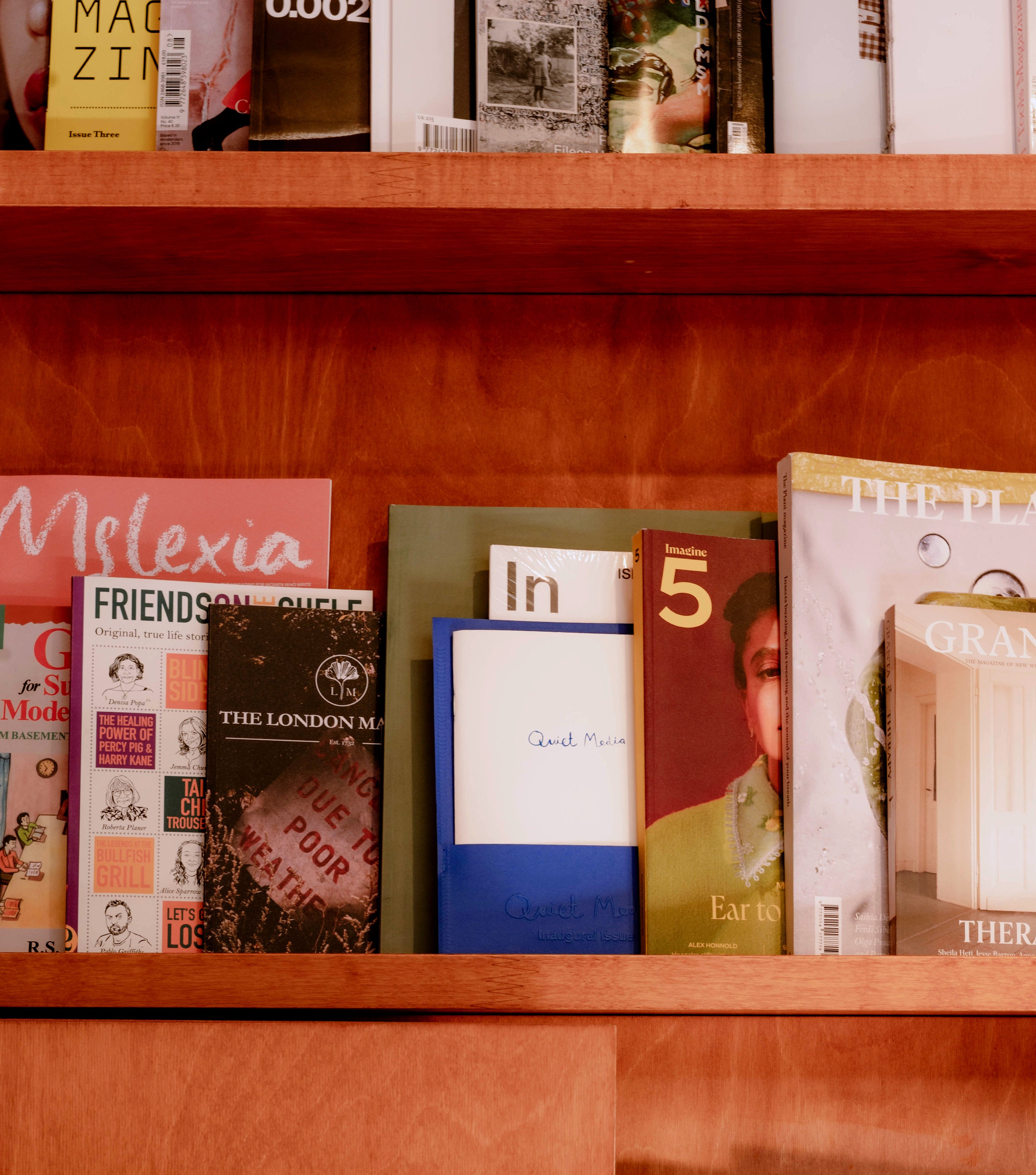
Quiet Media is intentionally print-first, and what that means is the print experience is put at the forefront. So the articles are not published online in full; the reading of the magazine is meant to be something unique. It’s meant to be an experience that you can’t really get anywhere else, and you can’t replicate that digitally. We do have a digital copy that we’re selling, and the designers have done an incredible job also of making that look really good. But ultimately, you can’t replicate the experience of print.
Having a special experience for the few print readers was something nice to create, and it created a little community and a meaningful experience for those people.I would much rather reach less people who are more interested, and who the project is more relevant for, than have everybody hear about the project but then nobody buy it.
Starting small and taking that approach of slow growth has also been really good for my nervous system. It’s kept me excited and it’s kept me close to the readers. I’ve been able to send emails to them all, and have a personal relationship with some of them which have been byproducts of a smaller reach.
If you were to then at some point get a circulation of like millions of people, would that then not be Quiet Media? Would that not be this intimate space? Do you see that as an inherent conflict?
That’s something I’m wondering myself, and exploring a lot too — which is, can you create intimate experiences at scale? I don’t know the answer to that. I think you could still do it with print because it does still give people that personalised experience. It would be a good challenge to explore in the future.
Something I was reflecting on when reading Quiet Media is whether there are broader societal consequences related to the fact that a lot of us are very busy and are absorbing a lot of information. What are your thoughts?
I think we are feeling quite anxious as a society. There's a lot of people not feeling inspired and not really feeling productive, overwhelmed. There's a lot of these kinds of almost — not super negative emotions, but a kind of liminal space of nothingness. I think that we often try to treat that with more consumption, right — so we're then scrolling to turn our brains off or whatever. And I think actually we need to be able to give our input time to digest.
The internet is an incredible place. Even social media can be really, really great and useful — I've met a lot of friends, and I've seen a lot of great ideas on social. But the idea is that you always need to do something with that. How many times are you in an endless scroll and you're like, "that's cool," or "that's cool," or you save something, but then you do nothing with it?
One thing I wrote about as well was how reclaiming our attention is the next creative act. And I really do believe that, because that looks different for everybody — everyone will have their own way of creating those boundaries for themselves and their consumption. As a society, we just need to be better at creating them.
Often the response is the ban, right? The social media ban for children is great, but it’s the easier option to say, “actually, you know what, we’re gonna ban it altogether,” instead of creating healthier boundaries and encouraging good habits, because that takes time. That is hard.
Just to round off our discussion then, I was interested in how you personally try to live a quiet life. What are the practices, habits, tools, or anything else you can think of that you use to preserve attention?
I'm not speaking to anybody from like a high horse of any kind — I have my moments of scrolling too. But I do try to balance it with having enough moments for writing, thinking, reading, thinking deeply. I also monitor my consumption. I think the input is your output too — so what you are consuming is also what inspires you, and what comes out of that. So I do try to pick my sources and inspiration, and be kind of smart with what I am consuming.
Also, I think we have this really negative connotation of boredom. I try to find just empty space sometimes in my days and not fill every moment — which in London, is hard. I'm a person who likes to be busy, so sometimes I'm less good at that. But I try keep a bit of a balance, and find my own ways to do that.
Thank you so much, Charlotte!
For more, check out Quiet Media Zine Club’s next event coming up on the 23rd September. Caitlin Mayance will be talking about why saying less, not more, in the online sphere might actually make your work more distinctive and meaningful.
📚 A few recommendations:
My chat with Charlotte reminded me of a magazine which I LOVE, and which really inspired me when I first started reporting on technology in early 2018. The title is Offscreen, which is about the human side of technology, and is founded by Kai Brach (who also has a great newsletter: Dense Discovery). The magazine is currently paused, but you can still buy its print editions online.
I love this from the Wall Street Journal: The 24 New Rules for Succeeding at Work. Against a backdrop of layoffs, AI “transformation” and a lingering feeling of existential dread, employees are struggling. The article polls leaders for advice on everything from asking your boss for a raise to how to get your ‘mojo’ back.
IRL reading. If you’re in Berlin, there are loads of wonderful bookshops to visit. Chapters, She Said, St George’s English Bookshop and Minoa are some of my favourites. (I went to St George’s a few days into moving to Berlin, and the guy at the desk gave me a book for free, having seen how much joy I was getting from skimming through it.)
OpenAI acquired Jony Ive’s AI hardware startup, io Products, for $6.4bn in May 2025. The two companies are developing a so-called ‘third core device’ — a pocket-size, screenless AI gadget designed around ambient intelligence, though specific details have so far been scant. Reportedly, the device is meant to understand a user’s surroundings and daily context, without the constant notifications of a phone or Macbook.
You can read more about Scaman’s consequence architecture in her Substack post here. This particular line resonated with me: “Before you engage with any strategic challenge, you need to understand power - who benefits if this succeeds, who pays the cost, who has no voice in the decision being made.”
In the full interview, Charlotte mentions a book called Hooked: How to Build Habit-forming Products, by Nir Eyal, published in 2014. It’s a book often cited in critiques of addictive design.
Thank you for the great conversation Miriam. It was so wonderful to chat to you 💙
I think it is possible to create intimate experiences at scale. It has been done before, comic books are a phenomenal example. Fiction in the form of a periodical. Though I agree that it's not easy to predict in what form that would manifest in today's media landscape.